
Kastle Studio: the Bench Where the Numbers Live

With one game, the numbers live in the code and that is fine. With four, each with hundreds of units, abilities and weapons, touching a value becomes a hunt: which file, who uses it, what changes in the game, and the same mistake waits in every game. Kastle Studio was born on October 24 to be the one place for that: the showcase of everything the engine ships and the bench where the games' numbers are seen, tuned and measured. It runs in a window of its own, speaks English and Portuguese, and nothing done in it writes into the code without an explicit button.
The tabs
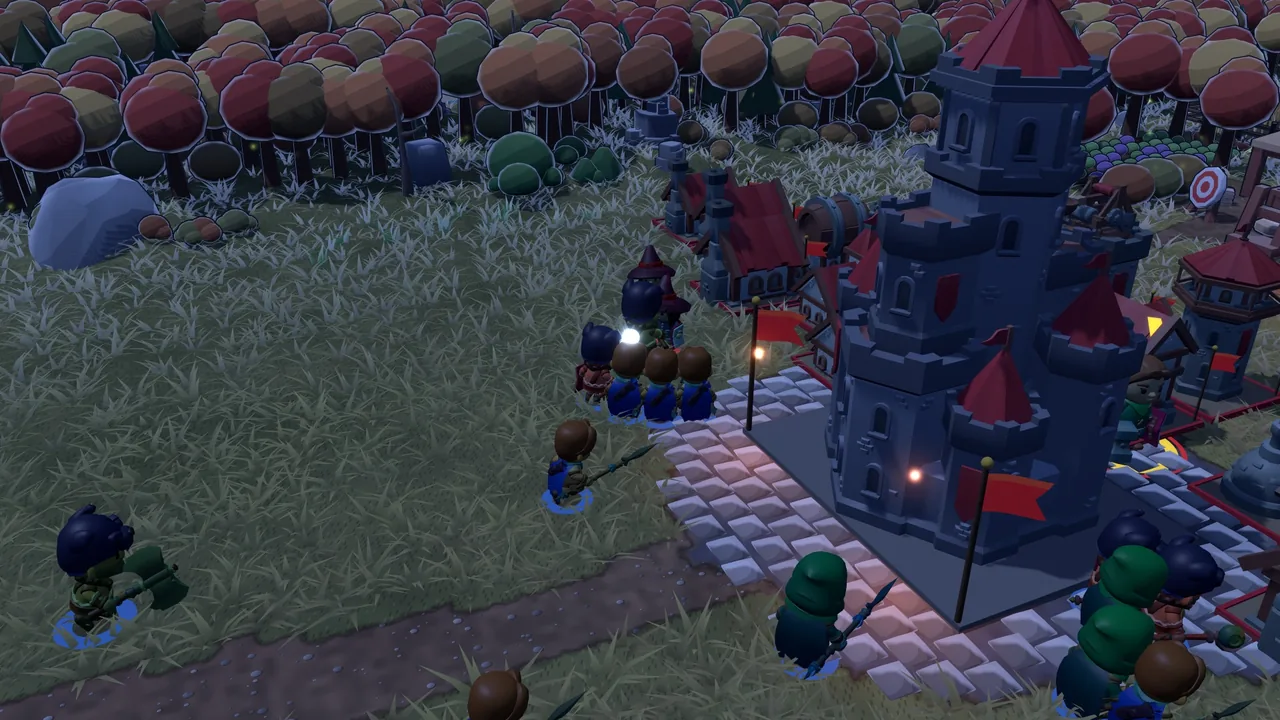
Personagens shows every creature in the library, by pack and group, with a portrait, the model at real size beside a soldier-height ruler, and every animation clip in the file, tagged with what the engine plays it for. A treadmill slides the floor at world speed while the walk clip plays: sliding feet mean a wrong stride. Height, stride, lift and tint are tuned live, and the Golpe tab marks on every attack clip the instant the blade lands, with an automatic measure that reads the end of the fastest joint's strike. Arena is the engine's real stage: island themes, weather, the hour, units standing, parading or skirmishing, shots in any look, and the renderer's numbers. It has a layout editor, with units, towers and props placed by hand. Efeitos puts each of the 235 effects on a stage of its own, once or on a loop from a quarter to twice the speed, with parameters tuned live and the cost of each in particles, draw calls and frame time. Ambiente shows the 1,115 scenery models and a demo map per pack family. Combate is Warcraft III's attack-by-armour table and the hero sheet. Áudio and Configurações close the list.
The games' tabs
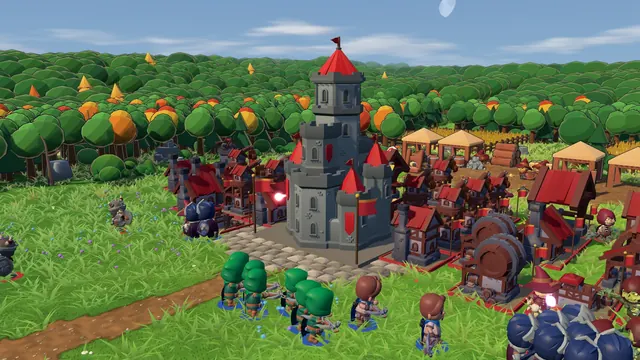
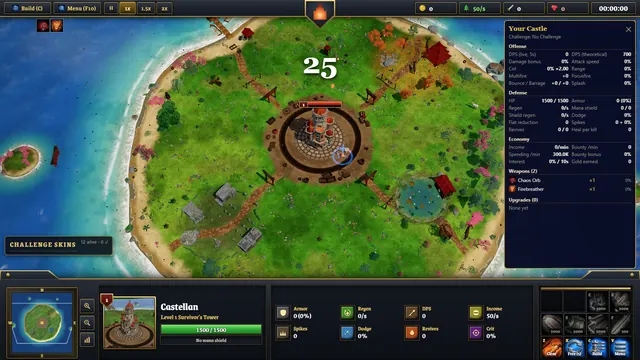
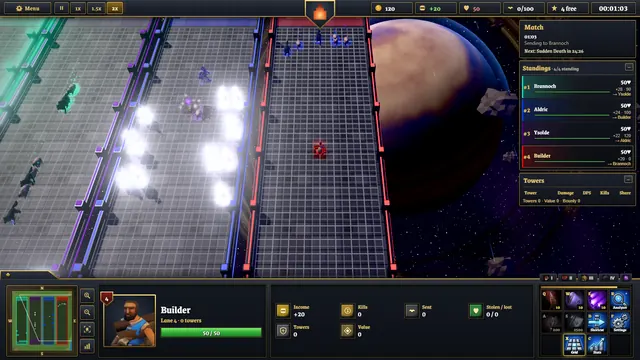
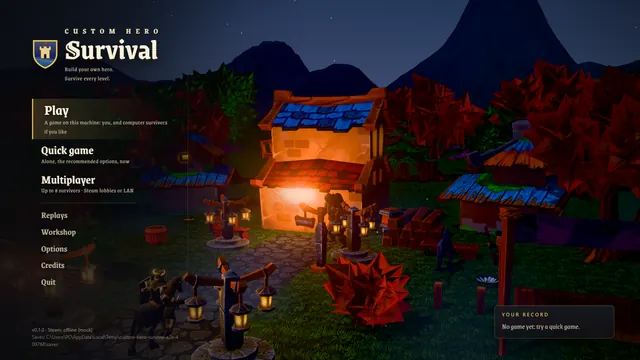
Each game has its tab: Castle Survivors was first, then Castle Arena, Line Tower and Custom Hero Survival. The game exports a pack with its data, and the Studio shows units in 3D, the game's icons, factions side by side, DPS by armour type and a time-to-kill matrix of every fighter against every other. On October 25 that stopped being read-only: a record has an Editar box, with names, texts, numbers and the 3D model picked from a grid of portraits, and Salvar no jogo writes the changes back into the game's source code, in the right place, and exports the pack again. A game can also declare its pack in a single file, saying where each section comes from and what may be edited, and then needs no exporter or importer. A field can be derived, read-only, or shown in the game's unit (seconds instead of ticks).
Measure before changing
The Mudanças tab compares today's pack with the previous export's, or with a file: what came in, what left, every value before and after. And Consequências answers the question that matters: what the change does to the matches. The numbers before and after run through simulators inside the Studio (in Castle Arena, every faction against the others and every troop in a duel, ten seeds; in Line Tower, a tower against a wave of creeps), and the matchups the change touched appear ordered by how far they moved. The same engine becomes a balance gate on the command line: every matchup with fixed seeds, in about 25 seconds, failing if one moved more than 10 points.
Linked to the game
The Studio talks to a game running in development. What is tuned in Personagens can be sent to the game at once, automatically if you like, and an effect can be played in the game, on the player's selection. The other way, the game reports its screen: the scene, the frame rate, the match's clock and what the player has selected, and the Studio opens the matching record. The Replays tab opens a replay or a desync report and shows the timeline of turns, each one's commands and, with two reports of the same match, the divergence checked check by check.
And the rest
Undo and redo over every edit, search over everything with Ctrl+K, missile looks as data files a mod can bring, arena layouts publishable as mods, a visual regression that draws the Studio's scenes at fixed moments and compares them with reference images, and a doctor that checks the machine of whoever just cloned. For the team, the Studio is where every game's data comes to live. For the game, nothing changes until someone presses Save.
— The team