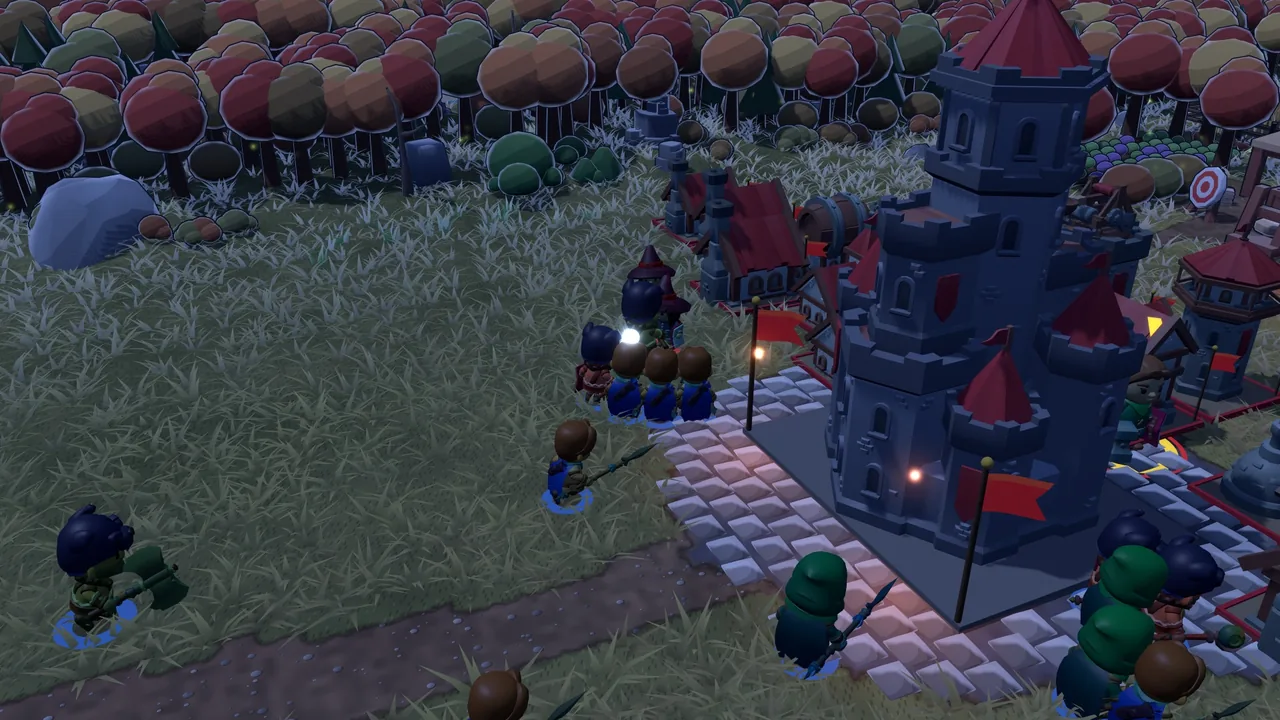

Before the First Castle

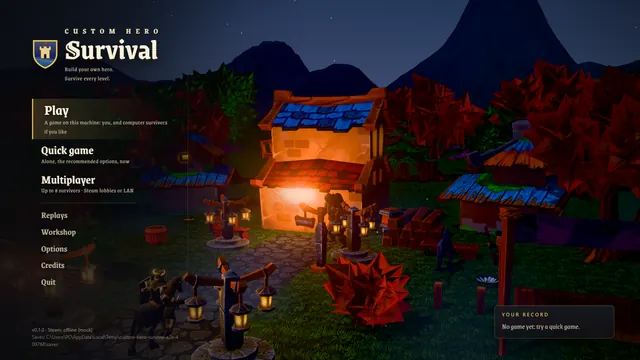
Everyone who grew up playing has a few games that never left their head. Ours were custom maps for Warcraft III, like Castle Fight, Tower Survivors, Line Tower Wars and Custom Hero Survival, plus the MMOs that came along with them: Ragnarok, Mu, Tibia. For years they stayed where good memories stay. This is the first chapter of how they got out.
A little free time
It all started with time. Life reached a point where a little of it was left over, and in that space a question showed up and never left: what if we brought these games back, our way, for everyone who misses them too?
There are two of us, and each one arrived with half. One comes from game design and QA: knows why a match hooks you, why a counter feels fair, when an economy gets boring, and is the one who plays everything again and again until it breaks. The other comes from software development, which is what turns all of that into something that runs. Together, the two halves were enough to attempt a dream: get a game of our own onto Steam.
That's how Midnight Pancakes was born. The name has no legend behind it. It recalls the nights we stayed up playing late, eating something between one match and the next.
Knowing how to think about a game and knowing how to program it is already a lot. But it isn't everything.
The blank canvas
Anyone who has started a project from scratch knows the feeling. On the first day there is nothing: no ground, no sky, no rule deciding who wins. Everything that will one day appear on screen is a decision waiting for someone to make it. How much a building costs, how long a troop takes to be born, what color the grass is. There are hundreds of questions before the first match, and almost none of them has an obvious answer.
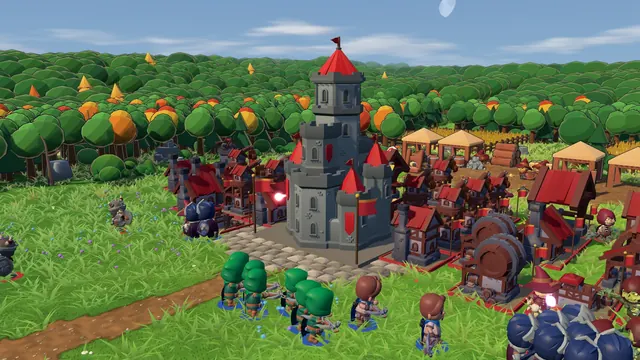
Even so, it's the best part. There comes a moment when the first troop leaves its building and starts marching on its own, and the project becomes a game. Then the field gets trees, the trees get wind, the sky gets night. What was a list of decisions becomes a place. Much of this devlog is about those moments.
What was missing: someone to draw
The second problem was more concrete: neither of us is an artist. Programming a castle is not the same as modeling it, painting it, animating it and making it look heavy when it collapses. In a two-person team, that is what stalls the most. The idea is clear in your head, but there's no way to show it.
The way out was assets: models, effects, icons, music and sounds made by artists who publish their own work so that others can use it in their games. Thanks to them, our ideas finally got off the drawing board.
Why this matters to us
We know this topic divides people. Some players turn up their noses at games made with assets, and we get it: nobody wants to see the same knight in ten different games. But for a two-person team, assets are the difference between a game that exists and one that stays forever on the list of ideas. What is ours is in what we do with them: the rules, the rhythm, the decisions you make in a match.
And there's another reason. Today you can generate an image in seconds, with nobody behind it. In a moment like this, using a person's work stops being just a shortcut and becomes a choice.
Using an artist's work, and saying who made it, is our way of valuing the artists who exist.
So, to start: thanks to Kay Lousberg (KayKit), Kenney, polyperfect, Hovl Studio, Bitgem, Binbun3D, N-hance Studio, Psionic, TomMusic, and to the people who release their own sounds on Freesound. Every pack we use has its license kept alongside the code, and their work appears in almost every image in this devlog.
What comes in the next chapters
This devlog tells the story in order:
- Before the first castle. This one.
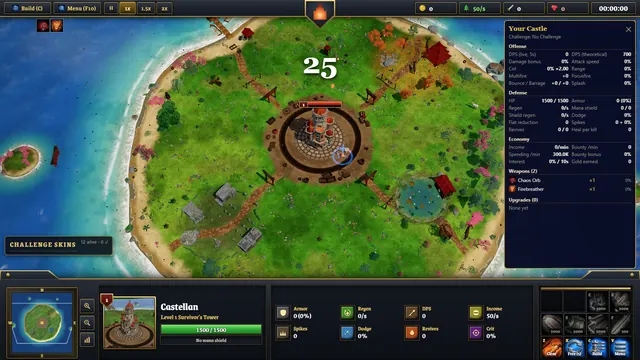
- A rule that fits in one sentence. The first game, and why in it you never command a soldier.
- When the leaves began to fall. The scenery coming alive, and what's still missing.
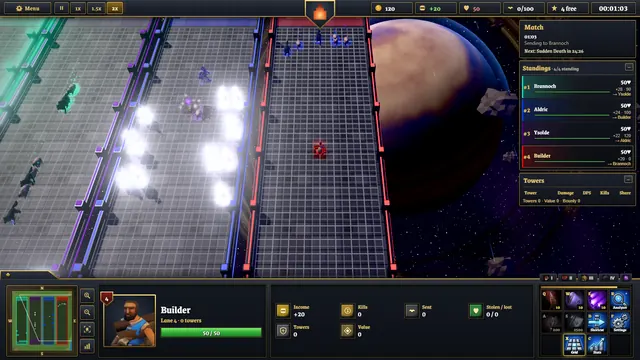
- When the numbers lied. Thousands of matches without graphics, and why you should distrust your own feel.
- Unlearning to click. How to teach a game without text boxes.
- On the other end of the rope. From the first online duel to battles of eight people.
- The hydra that wouldn't split. Fourteen factions, each playing its own way.
- One sibling, then three. How the list of maps became four games.
- One kitchen, four recipes. The engine and the bench the games share.
- Where we are. What each game has, what's missing, and how close the Steam release is.
Thanks for being here from the beginning.
— The team